
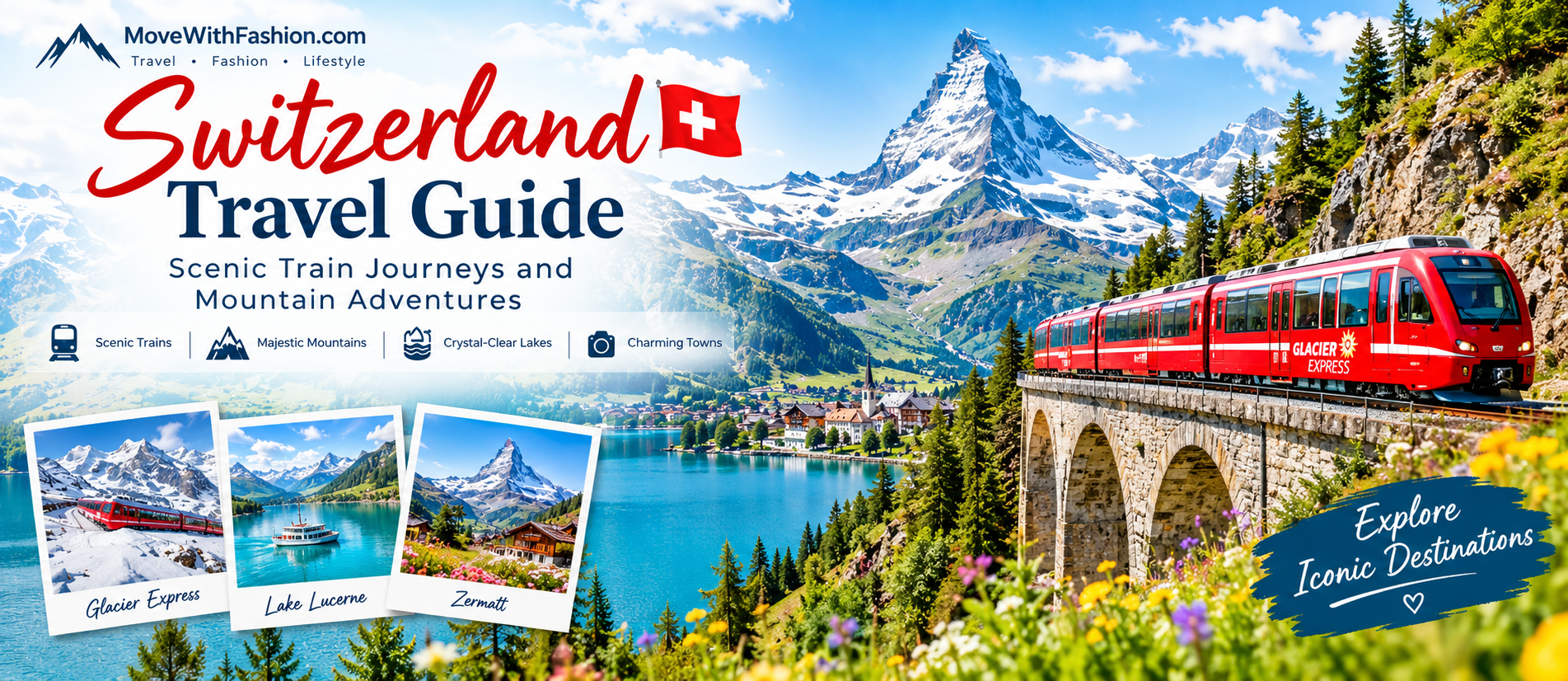
Switzerland Travel Guide: Scenic Train Journeys and Mountain Adventures
Switzerland is one of the most beautiful travel destinations in the world, famous for its snow-covered Alps, turquoise lakes, charming villages, panoramic railway journeys, and breathtaking mountain landscapes. Whether you dream of watching the sunrise over the Swiss Alps, riding a train through dramatic mountain passes, or exploring peaceful lakeside towns, Switzerland offers unforgettable experiences for every kind of traveler.
From the world-famous Glacier Express to the spectacular peaks of Jungfraujoch, this Switzerland travel guide will help you discover the best scenic train journeys, mountain adventures, destinations, and travel tips for planning an amazing Swiss vacation.
Discover the breathtaking beauty of Switzerland


Switzerland is located in Central Europe and is known for its excellent public transportation, picturesque mountain scenery, and well-preserved historic towns. The country is particularly attractive to travelers who enjoy nature, photography, hiking, train travel, and outdoor adventures.
One of the best things about visiting Switzerland is how easily you can combine different experiences in a single trip. You might spend one morning exploring a historic city, take a scenic train through the mountains in the afternoon, and finish your day beside a beautiful Alpine lake.
Why visit Switzerland?
- Scenic railway journeys through the Swiss Alps.
- Mountain excursions with panoramic views of glaciers and peaks.
- Beautiful lakes, waterfalls, and peaceful villages.
- Hiking trails for beginners and experienced hikers.
- Charming cities such as Lucerne, Zurich, and Bern.
- Winter skiing, snowboarding, and snow-covered landscapes.
- Boat cruises, cable cars, and unforgettable photography spots.
Whether you’re planning a romantic getaway, a family holiday, or a solo adventure, Switzerland offers a remarkable combination of natural beauty and convenient travel.
1. Experience Switzerland’s world-famous scenic train journeys


Traveling by train is one of the most memorable ways to explore Switzerland. The railway network connects major cities, mountain resorts, lakeside towns, and remote Alpine villages. Many routes offer panoramic windows, allowing passengers to enjoy the scenery without worrying about driving through winding mountain roads.
Here are three remarkable train journeys to consider.
Glacier Express: The slowest express train in the world

The Glacier Express is one of Switzerland’s best-known railway experiences. It connects Zermatt and St. Moritz, taking passengers through spectacular Alpine scenery, mountain valleys, bridges, and tunnels.
Despite its name, the Glacier Express is designed for sightseeing rather than speed. The complete journey takes approximately eight hours, depending on the timetable and operating conditions.
What makes the journey special?
- Panoramic windows that showcase the mountain scenery.
- Dramatic bridges and impressive engineering.
- Beautiful views of valleys, forests, and traditional villages.
- Onboard dining options on selected services.
- An opportunity to experience two famous Alpine destinations in one trip.
Travel tip: Reserve your seat well in advance during busy travel periods. A reservation fee may apply in addition to your valid ticket or rail pass.
Bernina Express: A spectacular journey across the Alps

The Bernina Express offers a remarkable railway journey between the Swiss Alps and northern Italy. Popular services connect Chur or St. Moritz with Tirano, crossing dramatic mountain landscapes and the famous Landwasser and Brusio viaduct areas along the wider railway network.
The route passes through scenery that changes from Alpine peaks and glaciers to green valleys and Italian-style landscapes. The Rhaetian Railway’s Albula and Bernina lines are recognized as a UNESCO World Heritage Site.
Highlights include:
- High-altitude Alpine scenery.
- Mountain lakes and impressive viaducts.
- Picturesque villages and changing landscapes.
- The opportunity to visit Tirano in Italy.
Best for: Couples, photographers, train enthusiasts, and travelers looking for a memorable cross-border adventure.
GoldenPass Line: Lakes, villages, and rolling hills

The GoldenPass route is another excellent option for travelers who want to discover Switzerland’s varied landscapes. The journey links the Lake Geneva region with the Bernese Oberland and central Switzerland through connecting railway services.
Depending on your itinerary, you can explore Montreux, Gstaad, Interlaken, and the Lake Lucerne region.
Expect scenic lakes, traditional Swiss chalets, rolling green hills, and spectacular mountain views. It is a particularly attractive choice for visitors who want to combine railway travel with stops in charming towns.
Travel tip: You don’t have to ride all three routes on one vacation. Choose one long panoramic journey and combine it with shorter regional train rides to leave more time for sightseeing.
2. Explore the breathtaking Swiss mountain adventures


Switzerland is an extraordinary destination for mountain lovers. Its Alpine landscapes offer everything from gentle walking paths to challenging high-altitude hikes, as well as skiing, cable-car rides, and panoramic viewpoints.
Jungfraujoch: A journey to the Top of Europe

The Jungfraujoch is one of Switzerland’s most famous mountain excursions. Its railway station sits at approximately 3,454 meters above sea level, making it a spectacular destination for travelers who want to experience the high Alps.
Visitors can enjoy impressive views of surrounding peaks and the Aletsch Glacier, explore indoor attractions, and experience a snowy mountain environment even when the valleys below are green.
Things to do at Jungfraujoch:
- Visit the Sphinx observation terrace when accessible.
- Admire the surrounding glaciers and mountain peaks.
- Explore the Ice Palace when open.
- Take photographs of the high-Alpine landscape.
- Enjoy the railway journey through the mountains.
The excursion can be expensive, so check ticket prices, weather, and mountain conditions before booking. The altitude is significant; take your time, stay hydrated, and avoid strenuous activity if you feel unwell.
Zermatt and the Matterhorn: An iconic Alpine escape

The village of Zermatt is famous for its dramatic views of the Matterhorn, one of the most recognizable mountains in the world.
Zermatt is largely car-free in its central village area, creating a peaceful atmosphere for walking between traditional chalets, restaurants, shops, and mountain viewpoints.
Popular experiences include:
- Riding the Gornergrat Railway for panoramic views.
- Hiking scenic trails around the village.
- Exploring mountain viewpoints and photography spots.
- Enjoying winter skiing and snowboarding.
- Relaxing in cafés with views of the surrounding peaks.
For many visitors, Zermatt is a highlight of a Swiss itinerary. Consider spending at least one or two nights here rather than treating it as a quick stop.
Mount Titlis: Snow and adventure near Lucerne

Located near Engelberg, Mount Titlis is a popular mountain excursion offering cable-car rides, snowy landscapes, and panoramic views.
Depending on the season and operating conditions, visitors may be able to enjoy glacier attractions, mountain viewpoints, snow activities, and the Titlis Cliff Walk.
It is a convenient choice for travelers staying in Lucerne who want to experience a high mountain without planning a multi-day hiking expedition.
Best for: Families, couples, photographers, and travelers who enjoy mountain scenery but prefer organized excursions to demanding hikes.
Hiking in the Swiss Alps

Switzerland offers thousands of kilometers of marked hiking paths. Some routes are suitable for beginners, while others require good fitness, experience, and appropriate equipment.
Popular areas include the Lauterbrunnen Valley, Grindelwald, Zermatt, and the trails around Lake Oeschinen.
Before setting out, check trail conditions, mountain weather, cable-car operating times, and the difficulty rating. Wear sturdy footwear and carry water, layers, sun protection, and a charged phone.
3. Visit Switzerland’s most beautiful towns and villages


Switzerland’s cities and villages are destinations in their own right. They provide a welcome contrast to the high mountains and make excellent bases for day trips.
Lucerne: A beautiful lakeside city

Lucerne combines historic architecture, waterfront scenery, and easy access to mountain excursions.
Walk across the famous Chapel Bridge, explore the Old Town, enjoy views of Lake Lucerne, or take a boat cruise. The city also makes a practical base for visiting Mount Titlis and other nearby mountain destinations.
Allow one or two days to enjoy Lucerne without rushing.
Interlaken: The gateway to mountain adventures

Situated between Lake Thun and Lake Brienz, Interlaken is a popular base for exploring the Jungfrau region.
Travelers can arrange excursions to Lauterbrunnen, Grindelwald, and Jungfraujoch, or enjoy boat trips, scenic walks, and outdoor activities.
Adventure enthusiasts can also look into paragliding, canyoning, and other guided experiences offered by local operators. Check age, fitness, weather, and safety requirements before booking.
Lauterbrunnen: A valley of waterfalls
Lauterbrunnen is famous for its steep valley walls, waterfalls, meadows, and traditional Swiss chalets.
It is an ideal destination for travelers who want to enjoy peaceful scenery, take beautiful photographs, and explore nearby mountain villages such as Wengen and Mürren.
Walk along the valley floor, visit accessible waterfalls, and enjoy a relaxed lunch while admiring the surrounding mountains. Check access and opening conditions for individual attractions before visiting.
Montreux: Lakeside charm and mountain scenery

Montreux sits on the shores of Lake Geneva and is known for its waterfront promenade, mountain views, and relaxed atmosphere.
You can stroll beside the lake, take a boat trip, visit nearby Château de Chillon, or use Montreux as a starting point for a GoldenPass railway adventure.
It is an excellent addition to an itinerary that combines scenic trains, historic attractions, and lakeside relaxation.
4. Discover Switzerland’s crystal-clear lakes


Switzerland’s lakes are among the country’s most beautiful natural attractions. Surrounded by mountains, forests, and picturesque villages, they offer opportunities for boat trips, lakeside walks, photography, and peaceful afternoons in nature.
Lake Brienz

Lake Brienz is famous for its striking turquoise water and mountain scenery. Boat excursions offer a relaxing way to appreciate the surrounding landscapes, while the nearby villages provide opportunities for scenic walks and day trips.
Lake Oeschinen

Lake Oeschinen is a spectacular Alpine lake surrounded by towering mountains. It is especially attractive to hikers and photographers who enjoy dramatic natural scenery.
Access involves travel to Kandersteg and, depending on your route and conditions, a cable car and a walk. Check seasonal access and trail information before planning your visit.
Lake Geneva

Lake Geneva is an excellent choice for visitors interested in combining beautiful scenery with cities, vineyards, historic attractions, and boat cruises. Lausanne, Montreux, and Geneva offer different ways to explore the lakeside region.
A lake cruise can be a particularly relaxing addition to a vacation filled with mountain excursions and railway journeys.
5. Best time to visit Switzerland
Switzerland is beautiful throughout the year, but the best time to visit depends on your interests, budget, and preferred activities.

Summer: June to August
Best for hiking
Enjoy green valleys, mountain excursions, lake cruises, and many hiking trails. This is a popular travel season, so accommodation and major attractions can be expensive and busy.

Autumn: September to November
Discover colorful forests, quieter destinations outside peak periods, and beautiful photography opportunities. Higher mountain areas can become cold or snowy, and some seasonal facilities close.

Winter: December to February
Ideal for skiing, snowboarding, festive markets, and snowy Alpine villages. Expect high demand in popular ski resorts around Christmas and New Year.

Spring: March to May
Enjoy changing landscapes and potentially fewer visitors in some destinations. However, higher hiking trails may remain snow-covered, and some mountain facilities operate on seasonal schedules.
My recommendation: June through September is a good starting point for travelers prioritizing hiking, scenic train journeys, and mountain sightseeing. For winter sports, consider December through March, checking the specific resort’s snow conditions and opening dates.
6. Suggested 7-day Switzerland itinerary
If this is your first visit, a seven-day itinerary offers a good introduction to Switzerland’s scenery without trying to see every region.

Day 1 — Zurich
Arrive in Zurich, explore the Old Town, walk beside the river, and enjoy a relaxed evening.
Overnight: Zurich

Day 2 — Lucerne
Travel to Lucerne, visit Chapel Bridge, explore the historic center, and consider a lake cruise.
Overnight: Lucerne

Day 3 — Mount Titlis
Take a mountain excursion from Lucerne via Engelberg. Enjoy the views and seasonal snow activities.
Overnight: Lucerne or Interlaken

Day 4 — Interlaken
Explore the town, enjoy the lake views, and plan an excursion into the Jungfrau region.
Overnight: Interlaken

Day 5 — Lauterbrunnen and Jungfrau region
Discover the waterfalls and villages of Lauterbrunnen, or book a Jungfraujoch excursion if weather and budget allow.
Overnight: Interlaken

Day 6 — Zermatt
Travel to Zermatt, explore the car-free village center, and enjoy views of the Matterhorn when conditions permit.
Overnight: Zermatt

Day 7 — Scenic railway experience
Enjoy a regional railway journey or plan a longer panoramic train experience, then depart from a suitable airport or continue your trip.
Note: A full Glacier Express journey requires a separate day and additional itinerary planning.
This itinerary is a framework rather than a fixed timetable. Mountain excursions are weather-dependent, and changing hotels frequently can consume valuable sightseeing time. For a more relaxed trip, remove one destination and spend an extra night in your favorite region.
7. How to travel around Switzerland
Switzerland’s public transport system makes it possible to explore much of the country without renting a car.
- Trains: Useful for traveling between cities, towns, and many mountain destinations.
- Panoramic trains: Ideal for travelers who want a dedicated sightseeing experience.
- Buses: Connect smaller communities and destinations that are not directly served by rail.
- Boats: Offer scenic journeys on lakes such as Lucerne, Brienz, and Geneva.
- Cable cars and mountain railways: Provide access to viewpoints and hiking areas.
Is the Swiss Travel Pass worth it?
The Swiss Travel Pass can be convenient for visitors planning multiple journeys on the Swiss public transport network. Depending on the pass and current terms, it covers eligible travel on many trains, buses, and boats and may include or discount certain mountain excursions and museum admissions.
However, it is not automatically the cheapest option for every itinerary.
Before buying, compare:
- The total cost of your planned journeys.
- The price of the pass for your chosen number of days.
- Any mandatory panoramic train seat reservations.
- Extra charges for mountain excursions.
- The eligibility rules for your travel dates and passenger category.
Check the official Swiss Travel System website for current conditions and pass details.
8. How much does a Switzerland trip cost?
Switzerland is generally an expensive destination, but careful planning can help you control costs.
| Travel expense | What to consider |
|---|---|
| Accommodation | Hostels, guesthouses, and hotels have very different prices by season and location. |
| Transportation | Compare point-to-point fares with suitable rail passes. |
| Mountain excursions | Cable cars and high-altitude railways can be significant expenses. |
| Food | Supermarkets, bakeries, and casual cafés can help reduce meal costs. |
| Activities | Prioritize the excursions that matter most to you. |
| Travel insurance | Choose suitable coverage for your trip and planned activities. |
For budgeting, look at current prices for your exact dates rather than relying on a single daily estimate. Summer, ski season, and major holidays can change accommodation and excursion costs substantially.
Money-saving tips
- Book accommodation early for popular destinations.
- Stay in one or two bases and take day trips where practical.
- Compare rail passes against individual tickets.
- Pack snacks and refillable water bottles.
- Choose free hiking trails and scenic village walks.
- Check cancellation policies before reserving mountain activities.
9. Where to stay in Switzerland
Your accommodation choices can make a big difference to both your budget and your itinerary.


10
- Zurich: Convenient for international arrivals, city sightseeing, and transport connections.
- Lucerne: A great base for lakeside sightseeing and excursions to nearby mountains.
- Interlaken: Useful for exploring Lauterbrunnen, Grindelwald, and the Jungfrau region.
- Zermatt: Best for Matterhorn scenery, hiking, skiing, and mountain railways.
- Montreux: Excellent for Lake Geneva, lakeside walks, and the GoldenPass route.
Compare hotels, apartments, guesthouses, and vacation rentals based on location, transport access, cancellation terms, and total cost. A cheaper room far from the train station may not save money once you factor in additional travel.
10. What to pack for a Switzerland adventure


Weather can change quickly in the mountains, so packing layers is important even during summer.
Consider bringing:
- Comfortable walking shoes or hiking boots.
- A waterproof jacket and warm outer layer.
- Sunglasses, sunscreen, and a hat.
- A reusable water bottle.
- A small daypack for mountain excursions.
- A portable charger and camera.
- Any required travel documents and reservations.
- Winter clothing and suitable footwear during snowy months.
For higher-altitude trips, check the forecast before leaving and dress for conditions at the summit, not just the temperature in town.
11. How to book Swiss train journeys and mountain tours
Planning ahead can make your Swiss adventure easier and help you avoid disappointment during busy periods.
For railway tickets, routes, and reservations, start with the official Swiss railway and tourist railway websites. For guided excursions and bookable activities, compare reputable tour providers, inclusions, cancellation conditions, and recent customer feedback.
You can also explore these travel booking resources:
- SBB — train timetables, tickets, and public transport information.
- Glacier Express — dedicated panoramic rail journeys.
- Jungfrau Railways — mountain railways and Jungfrau region excursions.
- Viator — guided tours, sightseeing, and bookable experiences.
- GetYourGuide — tours, attractions, and selected mountain excursions.
Availability, prices, and affiliate programme terms vary. Check the provider’s current details before making a reservation.
Frequently asked questions about traveling to Switzerland
Is Switzerland worth visiting for the first time?
Yes. Switzerland offers an excellent mix of scenic train journeys, mountain adventures, lakeside towns, and convenient public transportation. A well-planned seven-day trip can provide a rewarding introduction to the country.
What is the most beautiful train journey in Switzerland?
The Glacier Express and Bernina Express are among the most famous panoramic journeys. The best choice depends on whether you prefer a long cross-country experience, dramatic Alpine scenery, or a route connecting Switzerland with Italy.
How many days are enough for Switzerland?
Five to seven days can cover several major destinations, while 10 to 14 days allows more time for mountain excursions, scenic railway journeys, and relaxed stays in different regions.
Is Switzerland suitable for families?
Yes. Families can enjoy lake cruises, mountain railways, scenic trains, easy walking routes, and outdoor attractions. Check age restrictions, accessibility, and weather conditions for individual activities.
Can you explore Switzerland without a car?
Yes. Trains, buses, boats, and mountain railways make many popular destinations accessible without driving. Some remote trailheads and accommodation locations may require additional transfers.
What is the best way to see the Swiss Alps?
A combination of scenic train journeys, mountain railways, cable cars, and hiking trails provides a wonderful introduction. Choose activities according to your budget, fitness, season, and weather conditions.
Final thoughts: Plan your unforgettable Swiss adventure
Switzerland is a destination where the journey can be just as memorable as the destination itself. From panoramic railway rides and turquoise lakes to peaceful Alpine villages and spectacular mountain viewpoints, every region offers something special.
Whether you choose the Glacier Express, explore the Matterhorn around Zermatt, discover the waterfalls of Lauterbrunnen, or enjoy a boat cruise on Lake Lucerne, the key is to plan a balanced itinerary that leaves time to appreciate the scenery.
Start by selecting your preferred season, choose two or three main destinations, and compare transport and excursion options before booking. With thoughtful planning, you can create a Swiss vacation filled with beautiful landscapes, memorable experiences, and remarkable photographs.
Ready to plan your Switzerland trip? Explore scenic train tickets, guided mountain excursions, and accommodation options to find experiences that fit your travel style and budget.











Post Comment