
Common Cancer Risk Factors You Should Know About


6
Cancer is a broad group of diseases in which abnormal cells grow uncontrollably and may spread to other parts of the body. There is rarely one single reason why someone develops cancer. Instead, cancer risk can be influenced by a combination of age, genetics, lifestyle, infections, environmental exposures, and other factors.
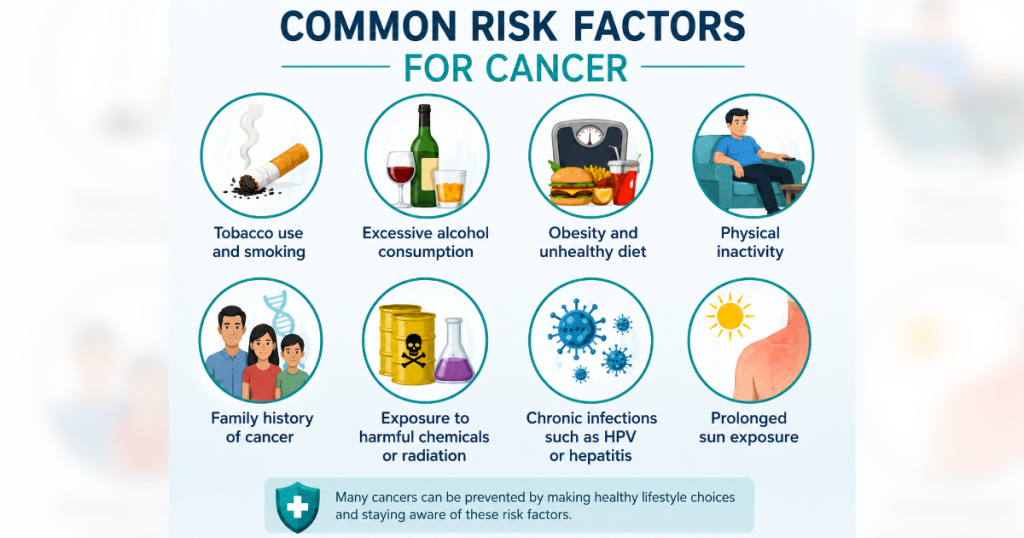
Some risk factors cannot be changed, such as getting older or inheriting certain genetic changes. Others—including tobacco use, alcohol consumption, physical inactivity, excess body weight, and excessive UV exposure—can often be reduced or avoided.
Understanding these risk factors does not mean that cancer can always be prevented. A person without known risk factors can still develop cancer, while someone with several risk factors may never develop it. However, understanding risk factors can help people make informed health decisions and discuss appropriate screening and prevention strategies with healthcare professionals.
What Is a Cancer Risk Factor?
A risk factor is something that can increase a person’s likelihood of developing a disease. Cancer risk factors include certain behaviors, environmental exposures, infections, inherited characteristics, and biological changes.
The National Cancer Institute explains that researchers generally identify risk factors by studying patterns among large groups of people. A risk factor does not necessarily mean that it directly causes cancer in every individual.
Cancer risk factors are commonly divided into two broad categories:
- Modifiable risk factors: Factors that may be changed or avoided, such as tobacco use, alcohol consumption, physical inactivity, and excessive sun exposure.
- Non-modifiable risk factors: Factors that generally cannot be changed, such as age, family history, and inherited genetic changes.
Knowing the difference is important because it prevents unnecessary blame. Developing cancer is not necessarily the result of an individual’s lifestyle choices.
1. Tobacco Use and Smoking


7
Tobacco is one of the most well-established cancer risk factors. Smoking exposes the body to numerous chemicals that can damage DNA and contribute to abnormal cell growth.
Tobacco use is associated with cancers of many parts of the body, including the:
- Lungs
- Mouth and throat
- Esophagus
- Bladder
- Kidney
- Liver
- Pancreas
- Stomach
- Colon and rectum
- Cervix
The CDC states that tobacco use can cause cancer almost anywhere in the body, while quitting tobacco lowers cancer risk. Secondhand smoke is also a concern for people who do not smoke themselves.
What can you do?
Avoiding tobacco is one of the most important steps people can take to reduce cancer risk. People who use tobacco and want to quit can speak with a healthcare professional about evidence-based cessation options.
2. Alcohol Consumption
Alcohol consumption is another established cancer risk factor.
According to the CDC, drinking alcohol increases the risk of several cancers, including cancers of the mouth, throat, larynx, esophagus, colon and rectum, liver, and breast. The CDC also notes that all alcoholic drinks—including beer, wine, and spirits—can increase cancer risk.
Alcohol may contribute to cancer through several biological mechanisms, including DNA damage, inflammation, and changes in hormone levels.
Does drinking less matter?
Yes. The CDC states that drinking less alcohol lowers cancer risk compared with drinking more. People who do not drink do not need to start drinking for health reasons.
3. Excess Body Weight and Obesity


6
Having overweight or obesity is associated with an increased risk of several types of cancer.
The CDC reports associations between overweight or obesity and 13 types of cancer, including cancers of the colon and rectum, liver, kidney, pancreas, uterus, and postmenopausal breast cancer.
Researchers believe several biological processes may contribute, including chronic inflammation and changes in insulin, insulin-like growth factors, and certain hormones.
Maintaining a healthy weight
A healthy approach should focus on sustainable habits rather than extreme diets. Helpful habits may include:
- Eating a balanced diet
- Choosing more fruits and vegetables
- Including appropriate sources of protein and whole grains
- Staying physically active
- Getting adequate sleep
- Discussing weight-management goals with a healthcare professional when appropriate
4. Physical Inactivity
Regular physical activity is associated with several health benefits, and physical inactivity is considered a cancer risk factor.
The WHO includes physical inactivity among important modifiable factors associated with cancer. Regular activity can also help with maintaining a healthy body weight.
You do not necessarily need an intense workout routine to become more active. Depending on your health and abilities, activities can include:
- Walking
- Cycling
- Swimming
- Dancing
- Strength exercises
- Recreational sports
- Household activities
If you have a medical condition or have been inactive for a long time, discuss an appropriate exercise plan with a healthcare professional.
5. Unhealthy Dietary Patterns
Diet is another factor that can influence cancer risk.
A healthy eating pattern generally emphasizes foods such as fruits, vegetables, whole grains, and other nutrient-rich foods. WHO identifies unhealthy diet and low fruit and vegetable intake among factors associated with cancer risk.
Rather than focusing on one so-called “superfood,” think about your overall dietary pattern.
Healthy eating habits may include:
- Eating a variety of vegetables and fruits
- Choosing whole grains more often
- Including healthy sources of protein
- Limiting highly processed foods
- Limiting excessive intake of processed meats
- Maintaining a healthy overall calorie balance
- Drinking enough water
Importantly, no individual food can guarantee protection against cancer.
6. Ultraviolet Radiation and Sun Exposure


7
Ultraviolet (UV) radiation is a major environmental risk factor for skin cancer.
UV exposure comes primarily from sunlight, but artificial sources such as tanning devices can also expose the skin to UV radiation. WHO identifies UV radiation as carcinogenic and recommends reducing excessive exposure.
Ways to reduce unnecessary UV exposure include:
- Seeking shade when sunlight is strongest
- Wearing protective clothing
- Wearing a wide-brimmed hat
- Using sunglasses that provide appropriate UV protection
- Applying broad-spectrum sunscreen as directed
- Avoiding artificial tanning devices
Sun protection is important even when the weather does not feel extremely hot.
7. Certain Infections
Some infections can increase the risk of cancer.
Important examples include:
- Human papillomavirus (HPV)
- Hepatitis B virus
- Hepatitis C virus
- Helicobacter pylori (H. pylori)
WHO estimates that cancer-causing infections account for a significant proportion of cancers globally, particularly in low- and middle-income countries.
For example, certain types of HPV can contribute to cervical and several other cancers, while chronic hepatitis B and C infections can increase the risk of liver cancer.
Vaccination can help prevent some cancer-associated infections. HPV and hepatitis B vaccines are examples of vaccines that can contribute to cancer prevention.
8. Age


5
Age is one of the most important non-modifiable cancer risk factors.
The risk of many cancers increases as people grow older. This is partly because genetic and cellular damage can accumulate over time, while the body’s ability to repair certain types of cellular damage may change with age.
Growing older is natural and cannot be prevented. However, age can be an important consideration when healthcare professionals recommend cancer screening.
9. Family History and Genetics
Some people inherit genetic changes that increase their likelihood of developing certain cancers.
A family history of cancer does not automatically mean that a person will develop cancer. However, certain patterns—such as several close relatives developing the same or related cancers, particularly at unusually young ages—may warrant discussion with a healthcare professional.
The NCI notes that family history can sometimes indicate a possible inherited cancer syndrome.
What should you know about your family history?
Consider learning:
- Which relatives have had cancer
- What type of cancer they had
- Approximately what age they were diagnosed
- Whether multiple relatives had related cancers
Sharing this information with your doctor can help determine whether additional evaluation or genetic counseling may be appropriate.
10. Radiation Exposure
Certain types of radiation can increase cancer risk.
Examples include:
- Ultraviolet radiation from sunlight
- Ionizing radiation from certain sources in the environment
- Some occupational exposures
- Certain medical radiation exposures
WHO notes that ionizing radiation can increase the risk of various cancers, with risk influenced by factors such as the amount of exposure and age at exposure.
Medical imaging should not be avoided when it is medically necessary. Instead, radiation-based tests should be used appropriately, with healthcare professionals weighing potential benefits and risks.
11. Workplace and Environmental Exposures
Some people may encounter cancer-causing substances through their workplace or environment.
Examples include certain exposures to:
- Asbestos
- Benzene
- Air pollution
- Radon
- Certain industrial chemicals
- Other occupational carcinogens
WHO notes that occupational carcinogens have been linked to cancers including lung cancer, mesothelioma, and bladder cancer.
People working around potentially hazardous substances should follow workplace safety procedures and use appropriate protective equipment.
12. Chronic Inflammation and Other Health Conditions
Long-term inflammation can play a role in the development of certain cancers.
Some chronic diseases and persistent infections can create an inflammatory environment that contributes to cellular damage over time. The NCI includes chronic inflammation, immunosuppression, hormones, and certain medical conditions among factors that can affect cancer risk.
This is one reason why managing chronic health conditions with appropriate medical care can be important for overall health.
Which Cancer Risk Factors Can You Control?
Not every risk factor can be changed, but several important ones can.
| Risk factor | Can it be modified? |
|---|---|
| Tobacco use | Yes |
| Alcohol consumption | Yes |
| Physical inactivity | Yes |
| Diet | Partly |
| Excess body weight | Often modifiable |
| UV exposure | Yes |
| Some infections | Prevention/treatment may reduce risk |
| Workplace exposures | Often reducible |
| Age | No |
| Family history | No |
| Inherited genetic changes | No |
Remember that reducing a risk factor does not guarantee that cancer will be prevented. Cancer develops through complex interactions between genetics, biology, environment, and other factors.
How Can You Reduce Your Overall Cancer Risk?


6
There is no guaranteed way to prevent every type of cancer, but evidence-based strategies can lower risk.
Consider these general habits:
1. Avoid tobacco
If you use tobacco, consider a medically supported quitting plan.
2. Limit alcohol
Less alcohol generally means lower alcohol-related cancer risk.
3. Stay physically active
Choose activities that you can maintain consistently.
4. Maintain a healthy weight
Focus on sustainable nutrition and activity rather than crash diets.
5. Eat a balanced diet
Build meals around a variety of nutrient-rich foods.
6. Protect your skin
Reduce excessive UV exposure and use appropriate sun protection.
7. Discuss vaccinations
Ask a healthcare professional whether HPV and hepatitis B vaccination are appropriate for you.
8. Know your family history
Tell your healthcare provider about significant cancer patterns in your family.
9. Follow recommended screening
Screening recommendations depend on factors such as age, sex, personal history, family history, and risk level.
10. Discuss unusual or persistent symptoms
Don’t ignore persistent changes in your health. A healthcare professional can determine whether further evaluation is appropriate.
Cancer Risk Factors: Key Takeaways
Cancer is not caused by one single factor. Instead, it can result from a complex combination of genetic, environmental, biological, and lifestyle influences.
Some important risk factors include tobacco use, alcohol, excess body weight, physical inactivity, unhealthy dietary patterns, UV radiation, certain infections, radiation exposure, environmental carcinogens, age, and family history.
The encouraging point is that several important risk factors can be modified. Avoiding tobacco, limiting alcohol, maintaining a healthy weight, staying physically active, eating a balanced diet, protecting your skin from excessive UV exposure, and following appropriate vaccination and screening recommendations can all form part of a cancer-risk-reduction strategy.
Most importantly, having a risk factor does not mean that you have cancer, and having no obvious risk factors does not guarantee that you will never develop it. If you have concerns about your personal cancer risk, family history, symptoms, or screening needs, speak with a qualified healthcare professional.
Medical disclaimer: This article is intended for general educational purposes and is not a diagnosis or substitute for individualized medical advice. Cancer screening and prevention recommendations vary by person and country. Always consult a qualified healthcare professional for advice about your individual circumstances.












2 comments